A think tank producing rigorous, accessible data for advocates, policymakers, & the public.
Clarity and perspective
on state climate policy.

The City of Chicago is aiming to electrify nearly
1 in 3 of the city's buildings.
PGL has been ordered to replace the pipes serving
1 in 4 of the city's buildings.
By 2035...
Rebuilding a quarter of the city's gas network—at ratepayer expense—is at odds with getting a third of the buildings off that same network... during the same timeframe.
From a total cost perspective, every dollar spent towards replacement—often the most expensive way to address leak risk—is a dollar not spent towards electrification.
We take the ultimate goal of this NPA workshop is being
to guide to PRP program towards...
1. minimizing the cost of addressing leak risk
2. maximizing the amount of electrification
But targeted electrification NPAs may offer a way to advance electrification while addressing leak risk.
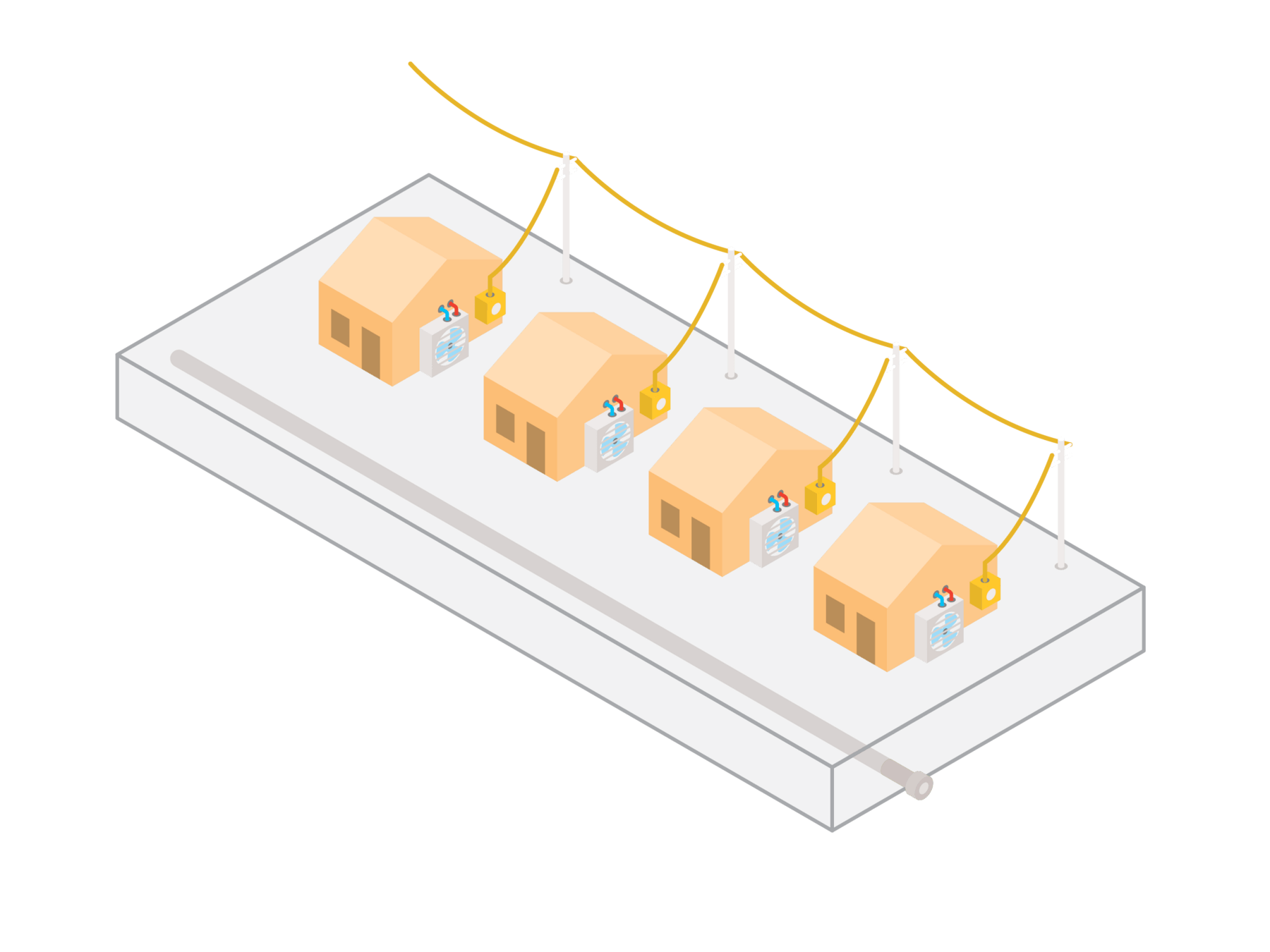
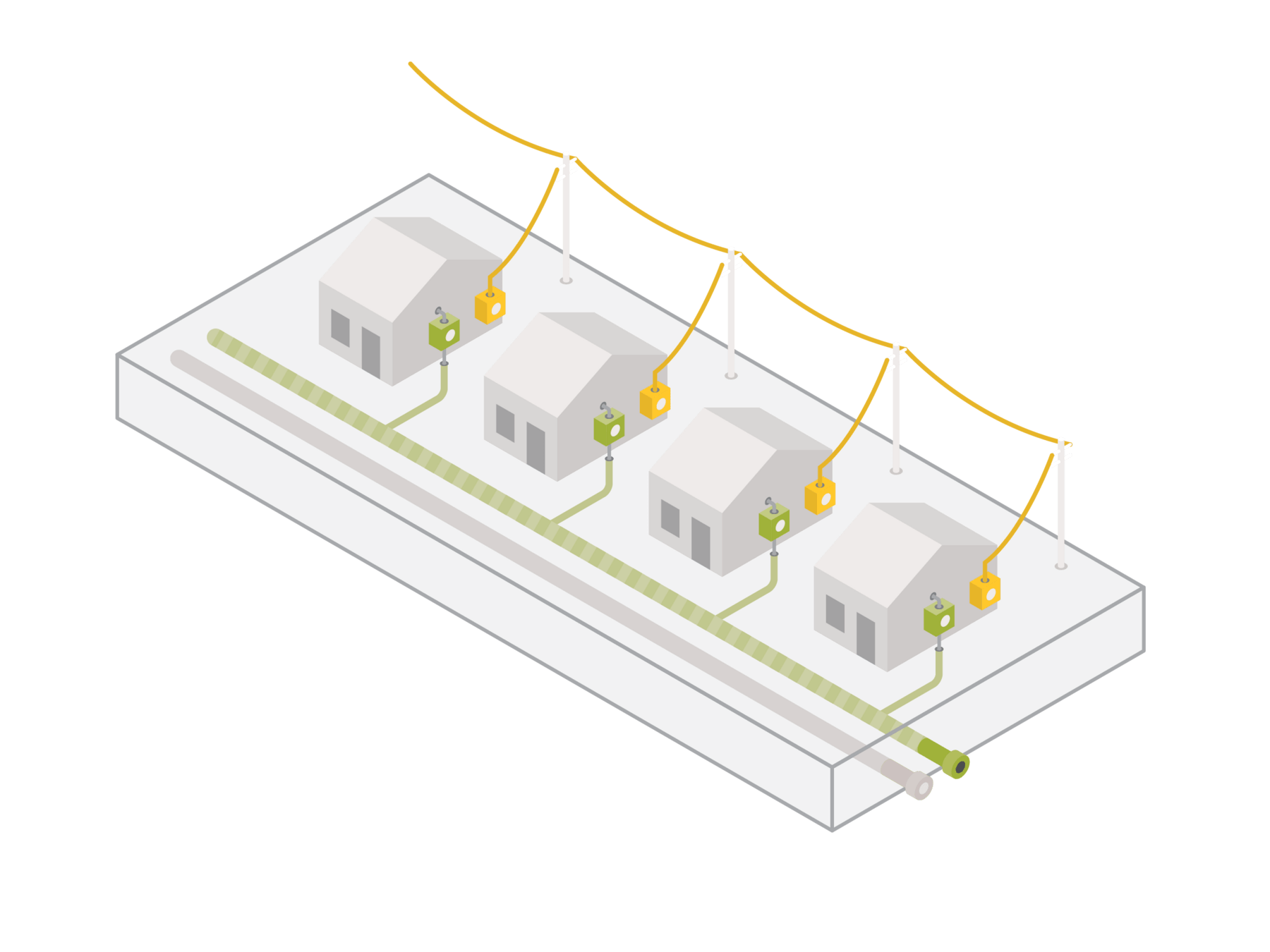
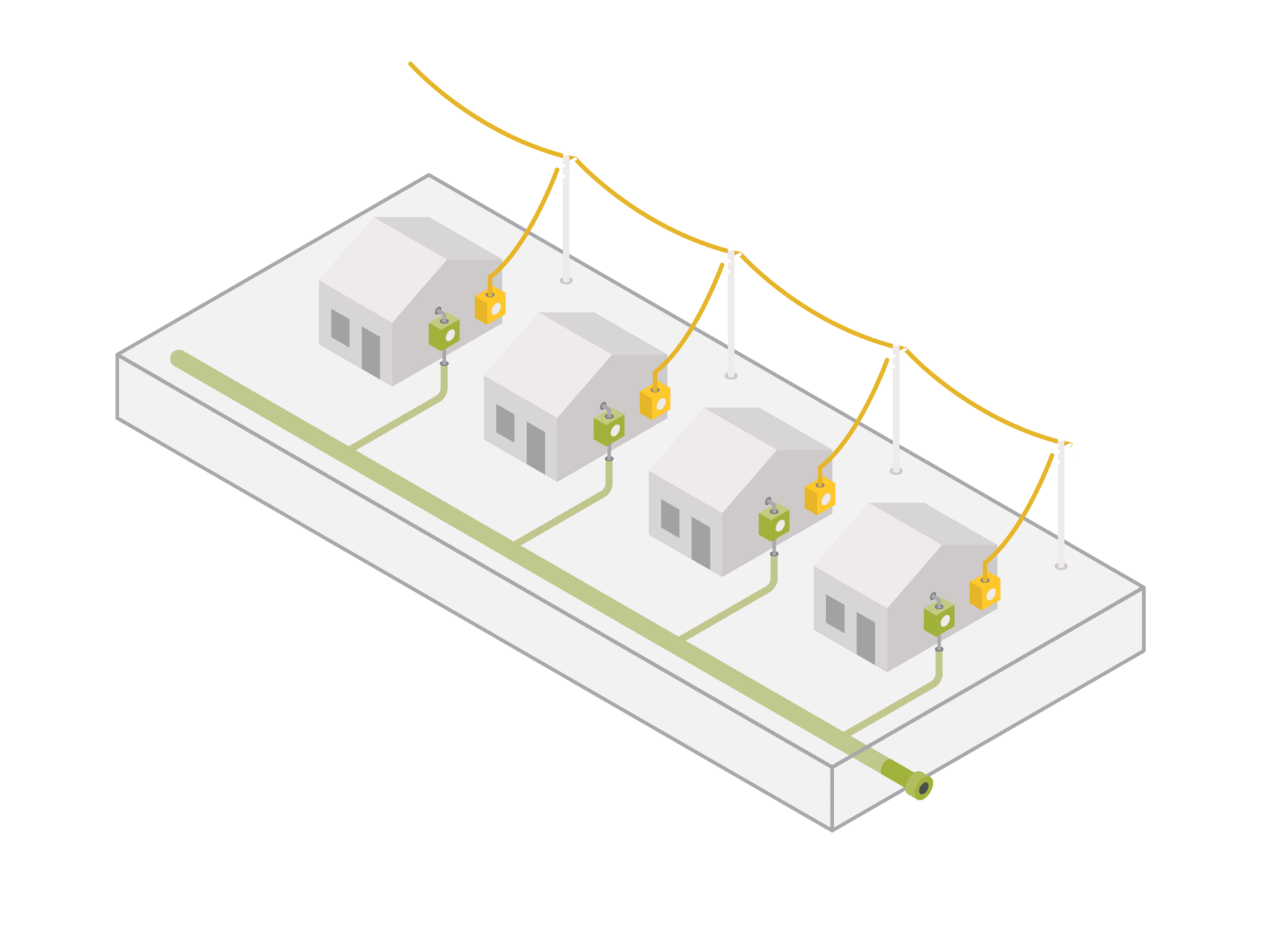
pipe replacementtargeted electrificationAs we'll see, there are different perspectives on cost-effectiveness.
We don't look at hydraulic feasibility.
(If there are no cost-effective TE opportunities,
there's no point in look at hydraulic feasibility!)
The question our study seeks to answer is: how many of the blocks that are on track to get pipe replacement could be cost-effectively electrified instead?
Upfront costs for targeted electrification are strictly cheaper than pipe replacement on a block.
Cost-effectiveness perspective #1

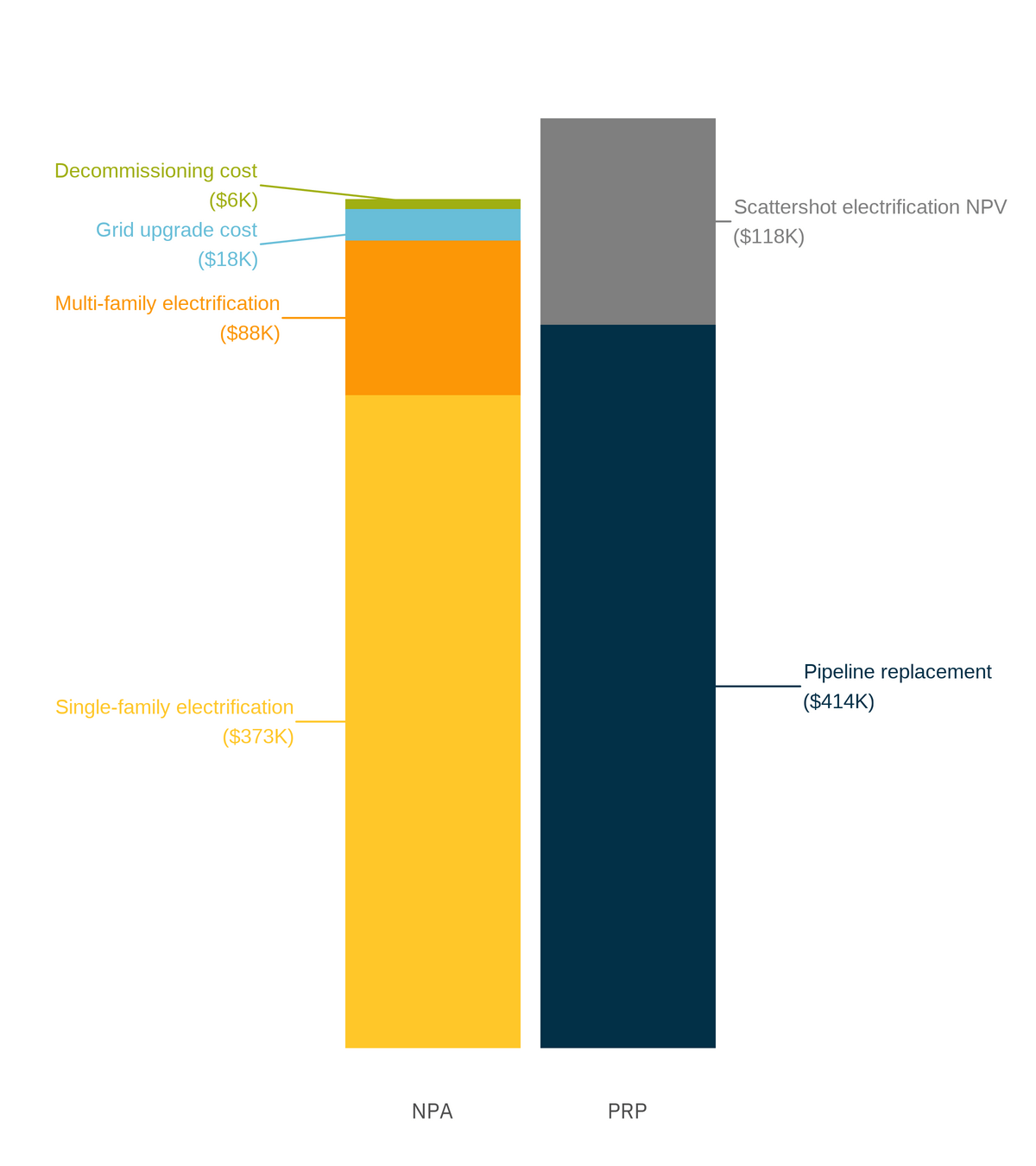
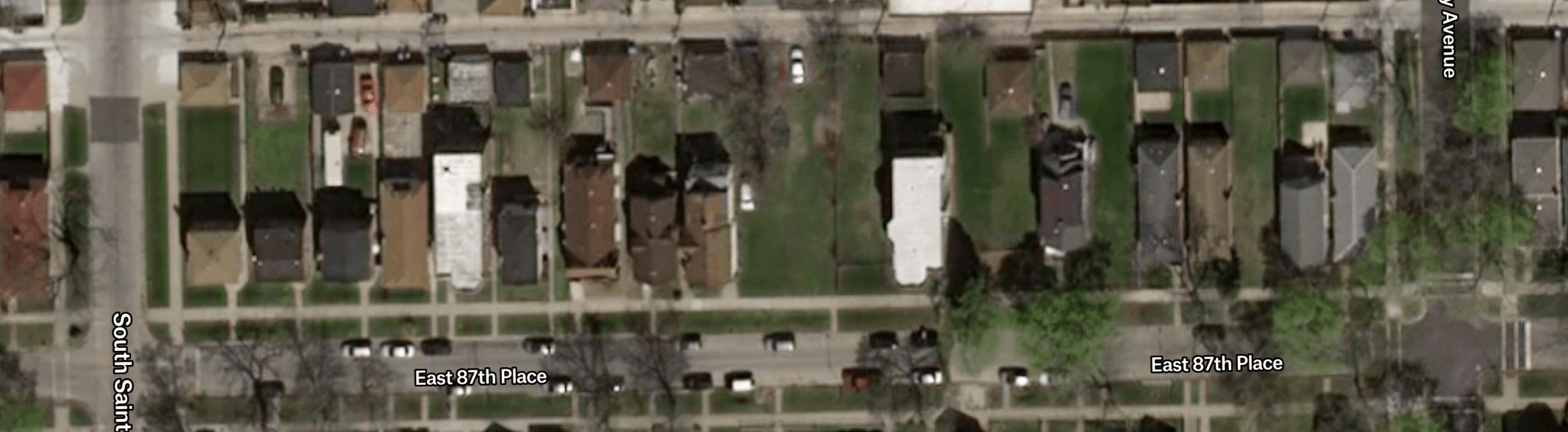
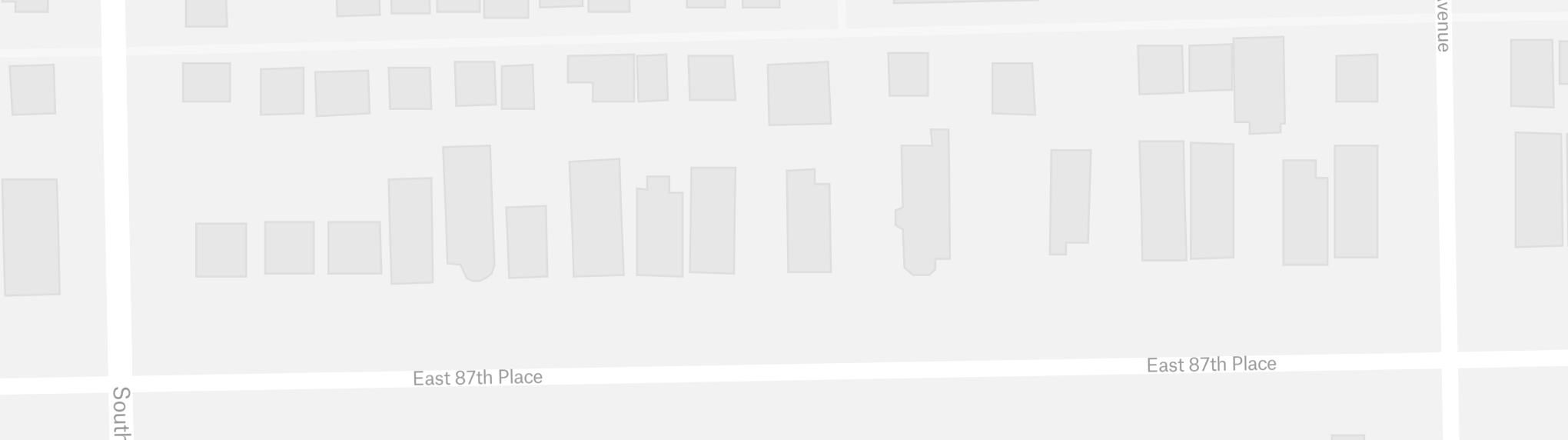
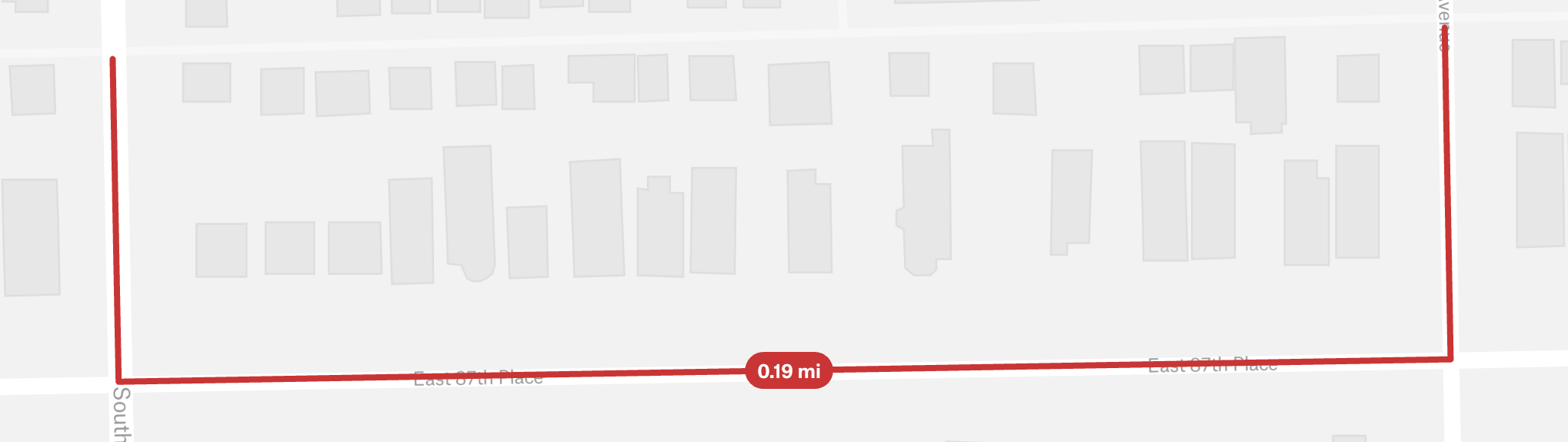
SF Electrification: $27.8K per unit
MF Electrification: $14.7K per unit
Grid upgrade cost: $209.7 per KW
Decomissioning cost: $66.4K per mile
Pipe replacement: $5M per mile
vs.
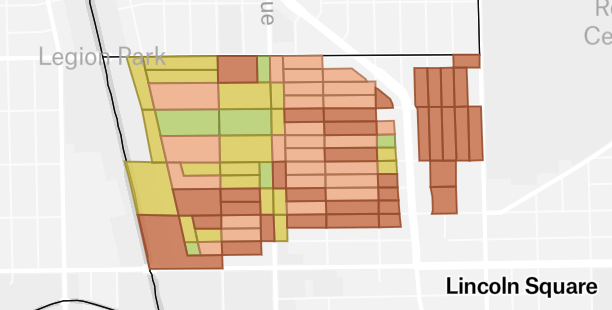
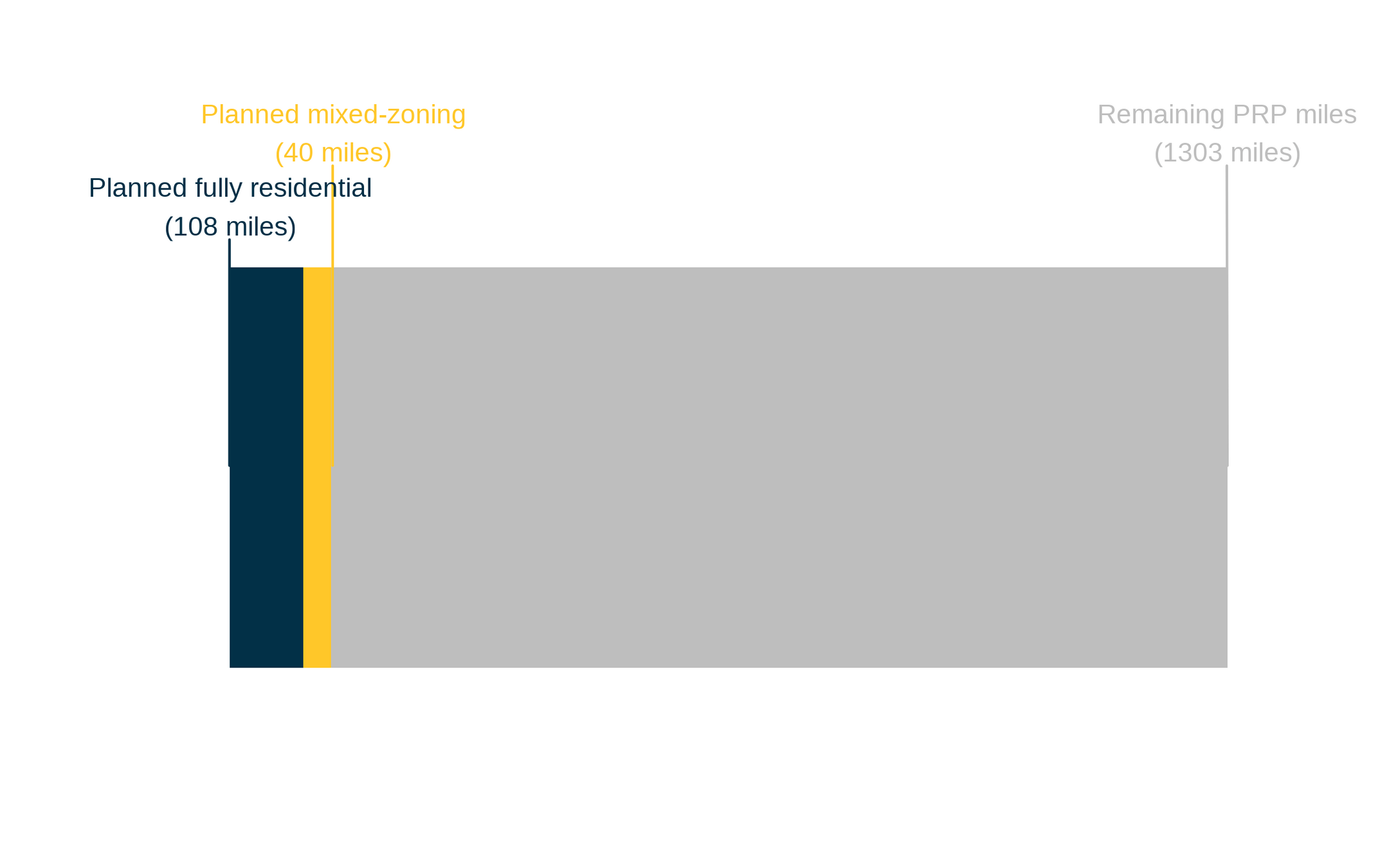
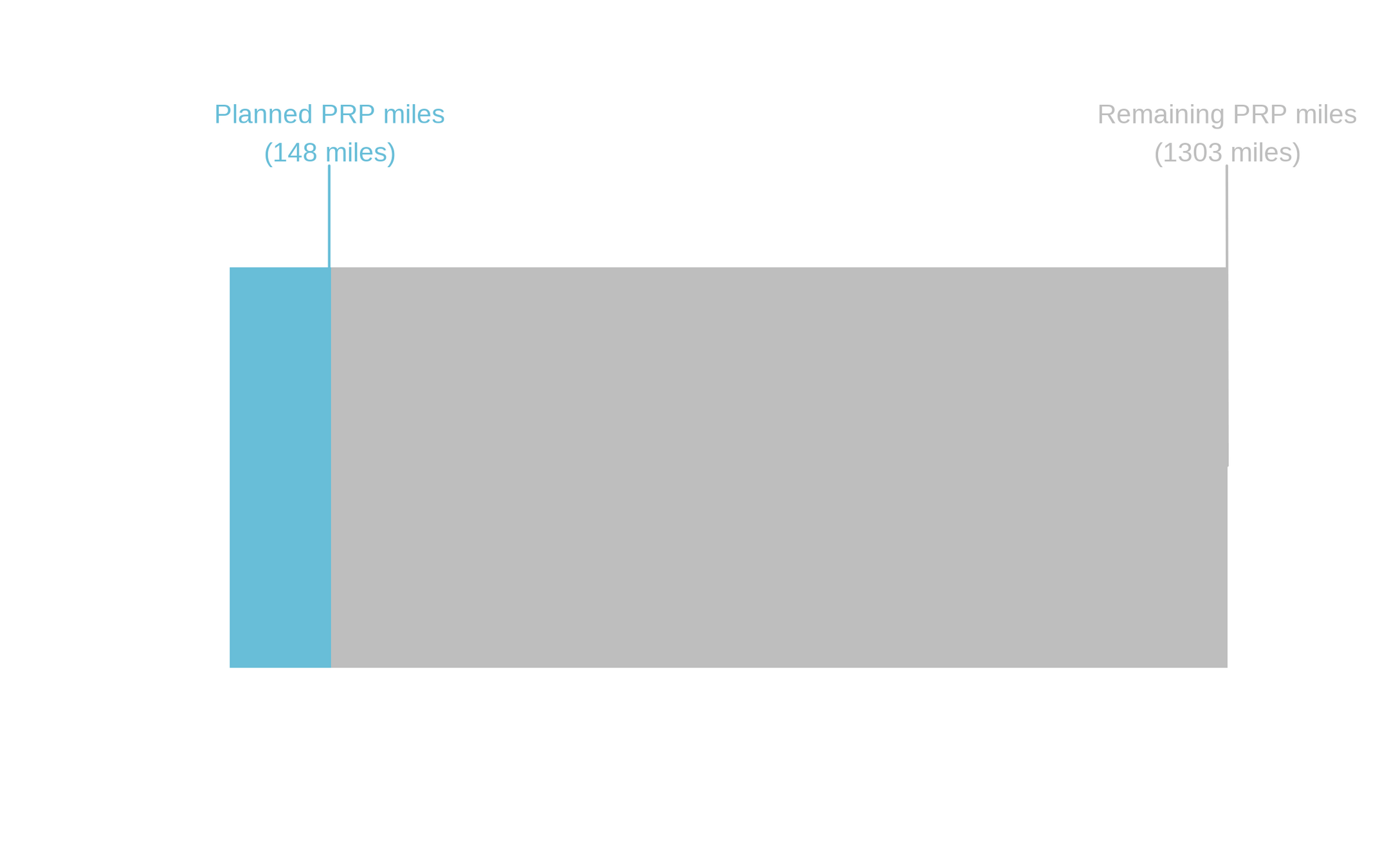
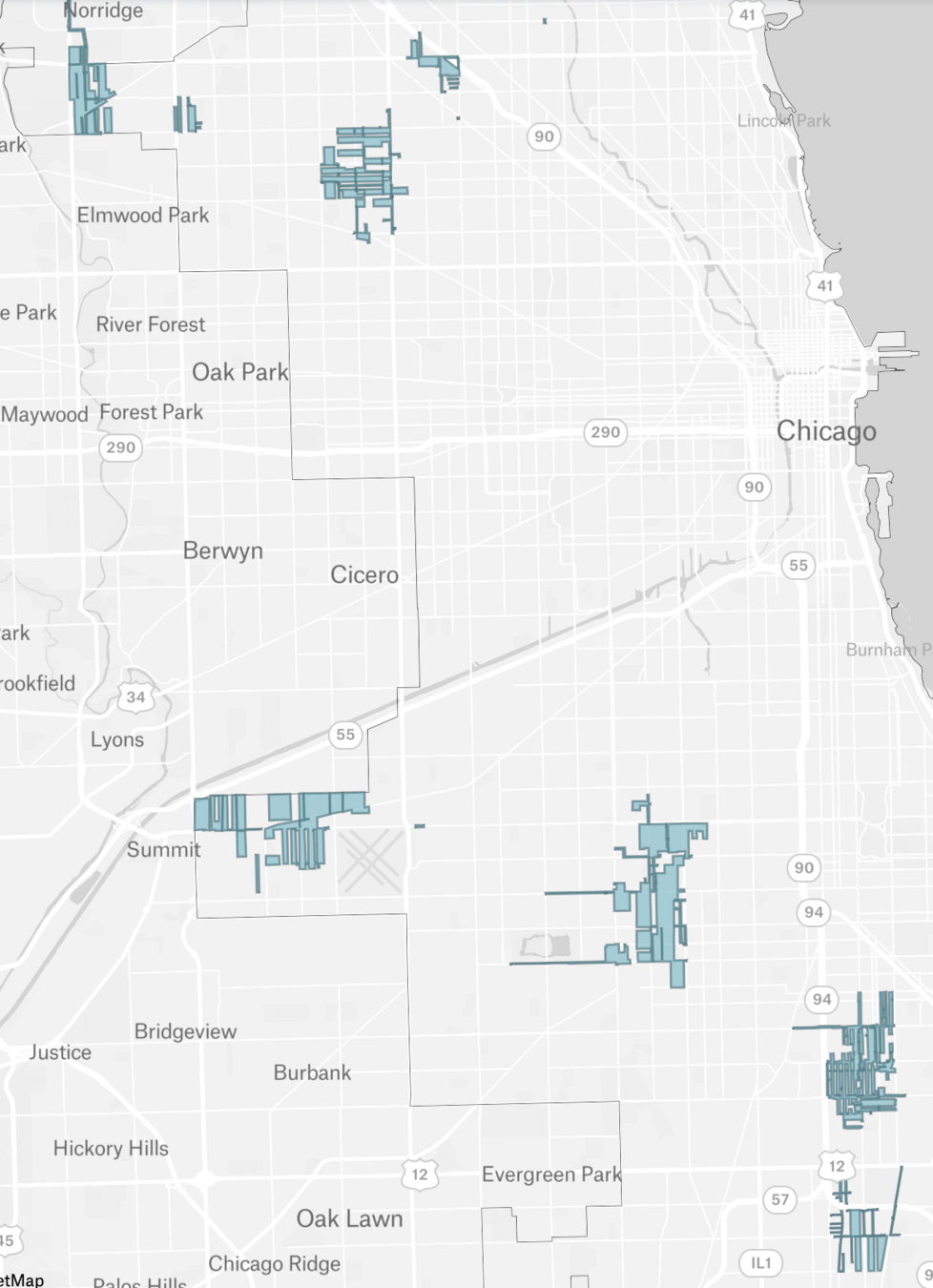
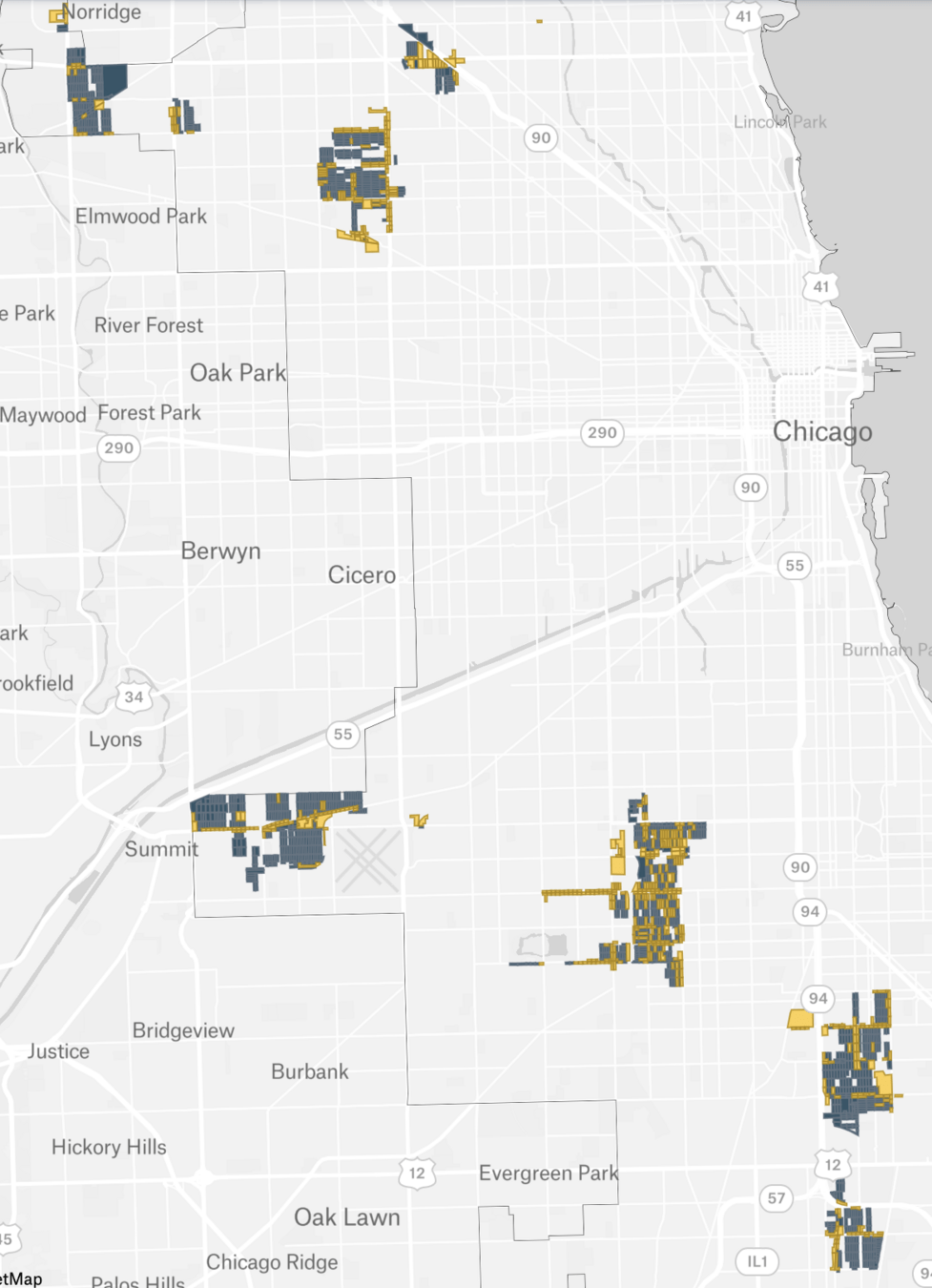
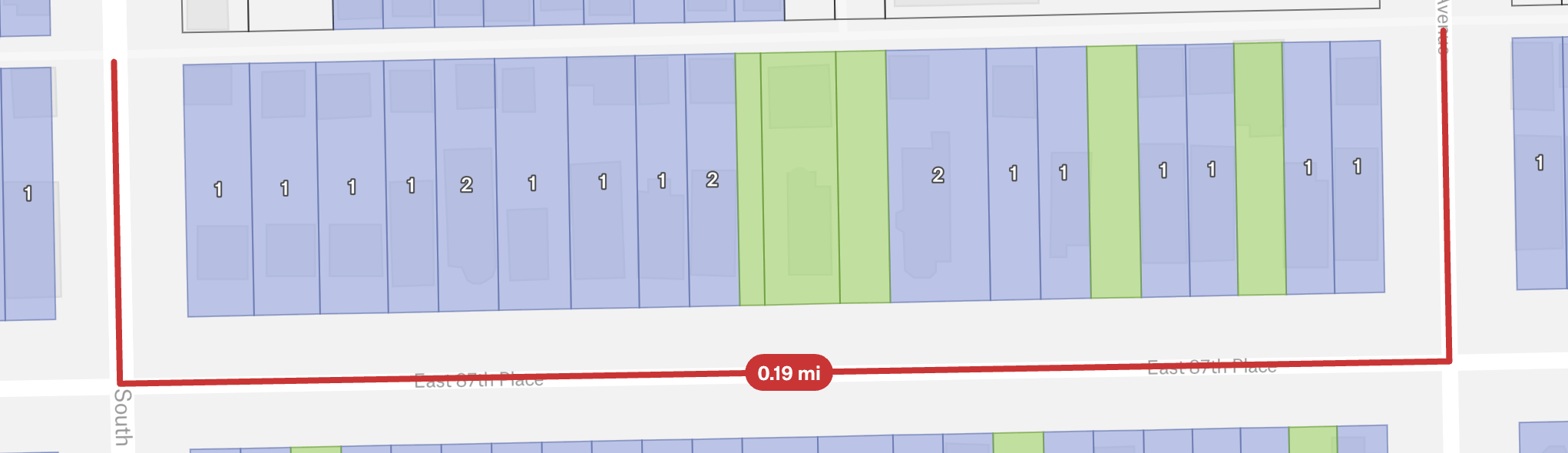
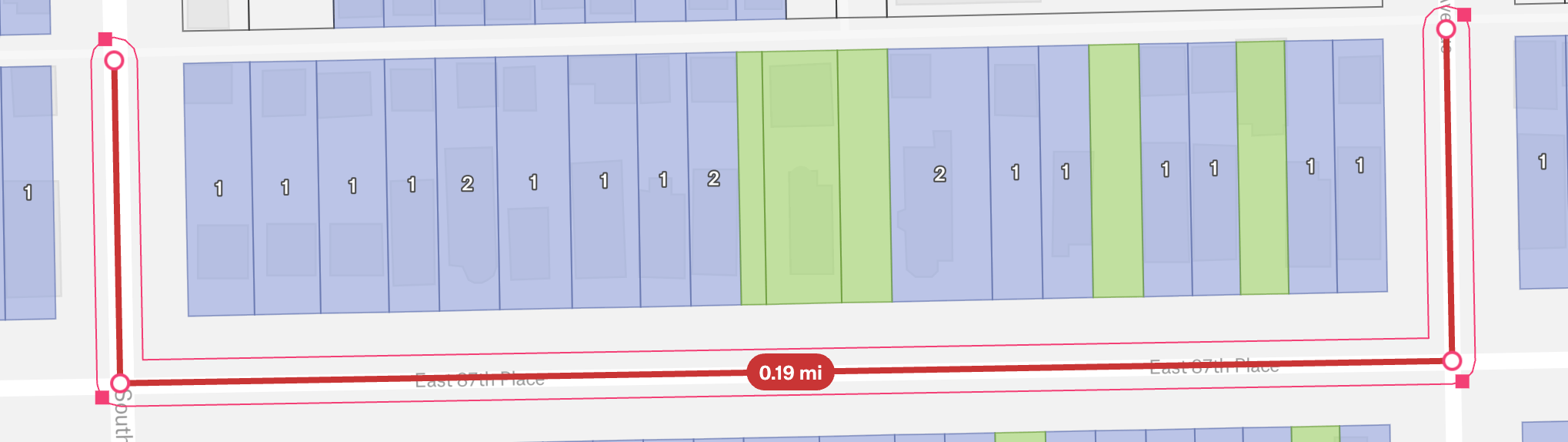
- 85 fully residential blocks in planned PRP areas
- Upfront costs of TE would be lower than replacement in 8% of these blocks
LINCOLN SQUARE
- 303 fully residential blocks in planned PRP areas
- Upfront costs of TE would be lower than replacement in 16% of these blocks
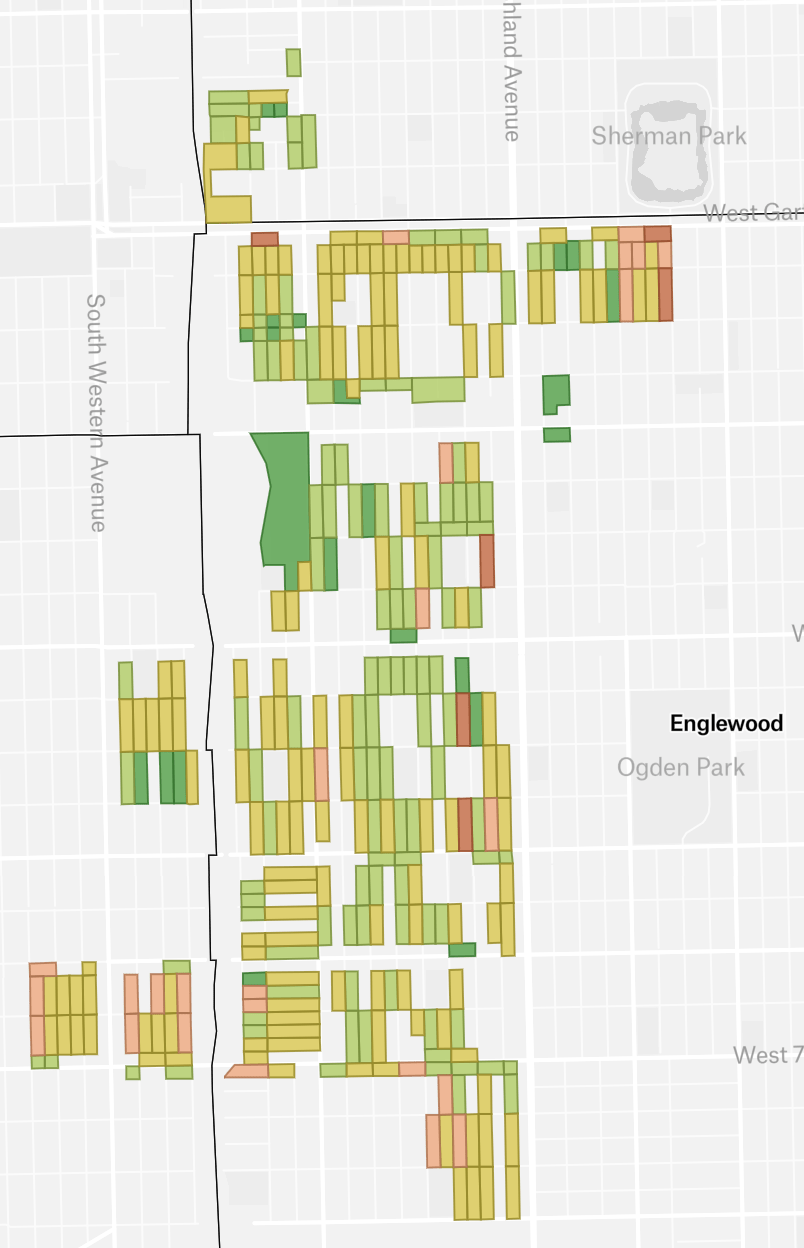
Garfield ridge
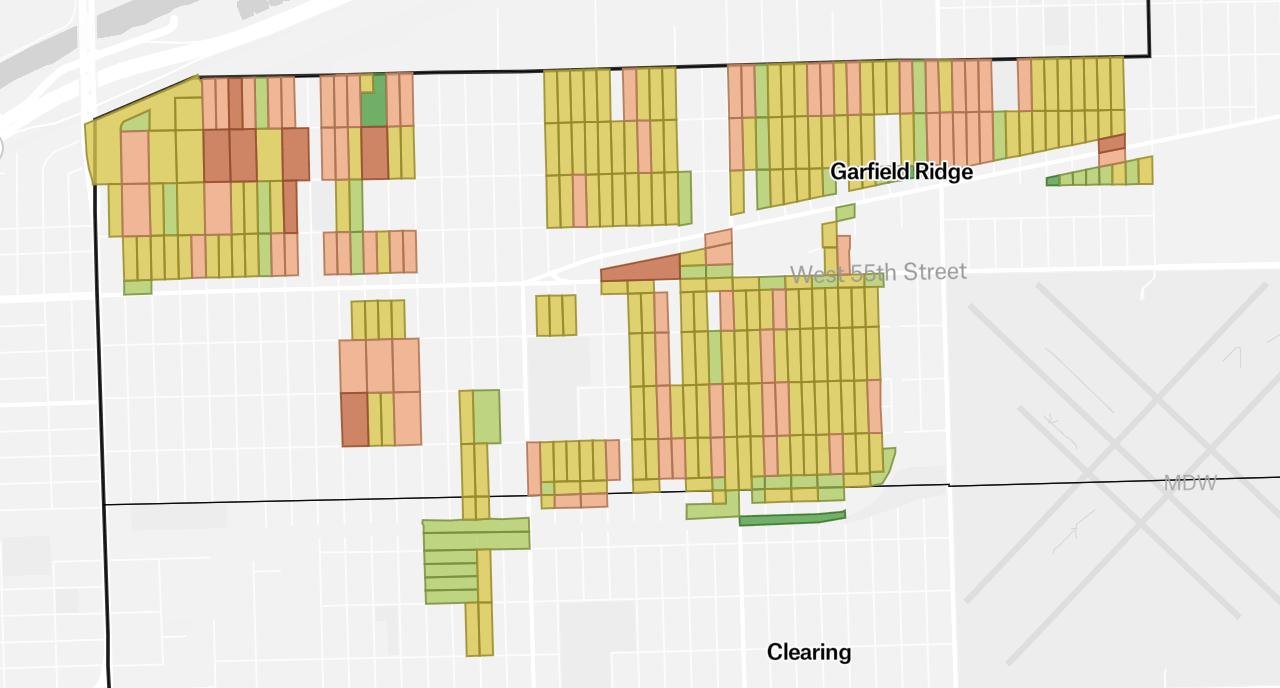
- 259 fully residential blocks in planned PRP areas
- Upfront costs of TE would be lower than replacement in 49% of these blocks
Englewood
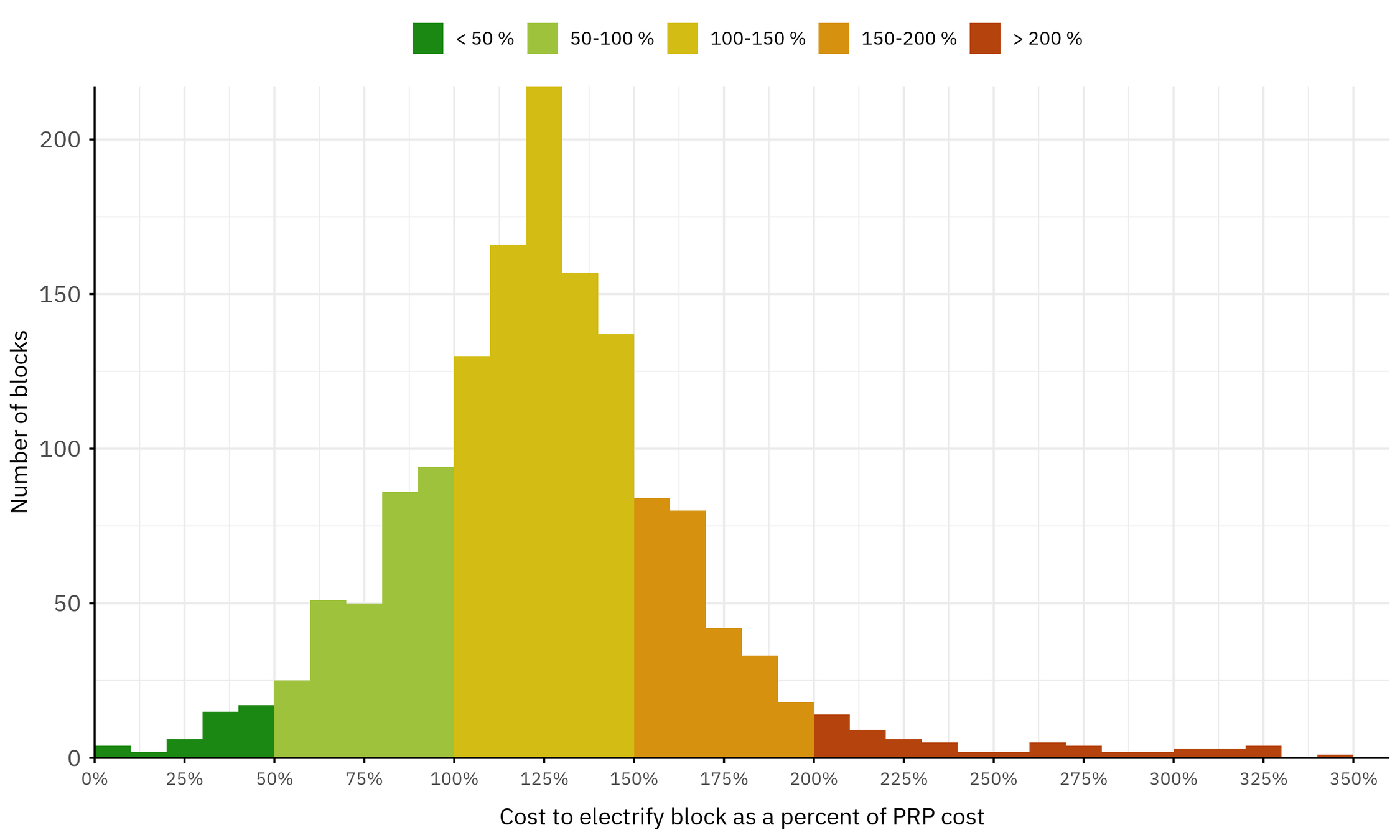
- 1488 of these blocks are fully residential
CIty-wide
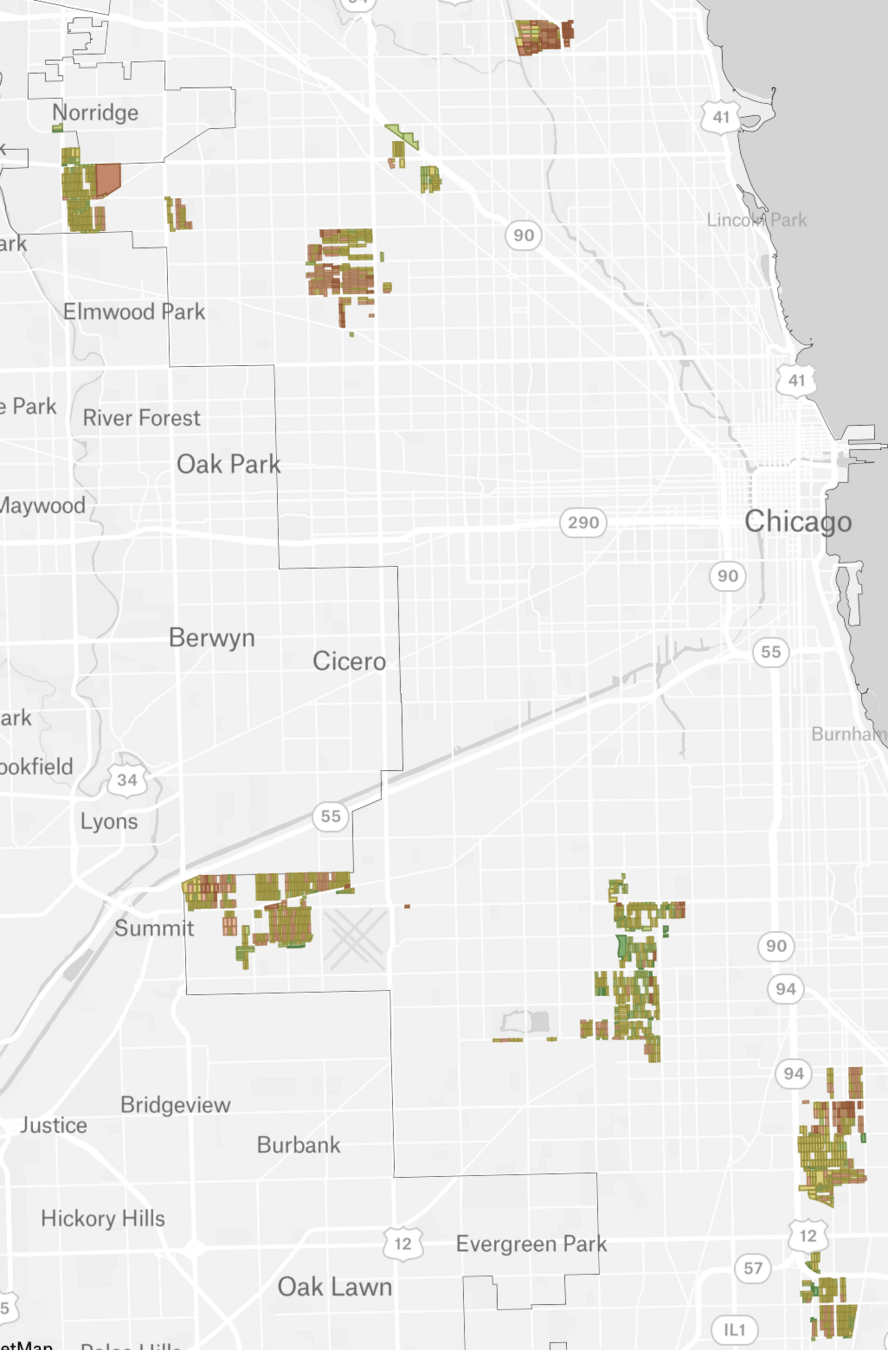
- There are 2,057 total blocks in planned PRP projects areas
TAKEAWAYS
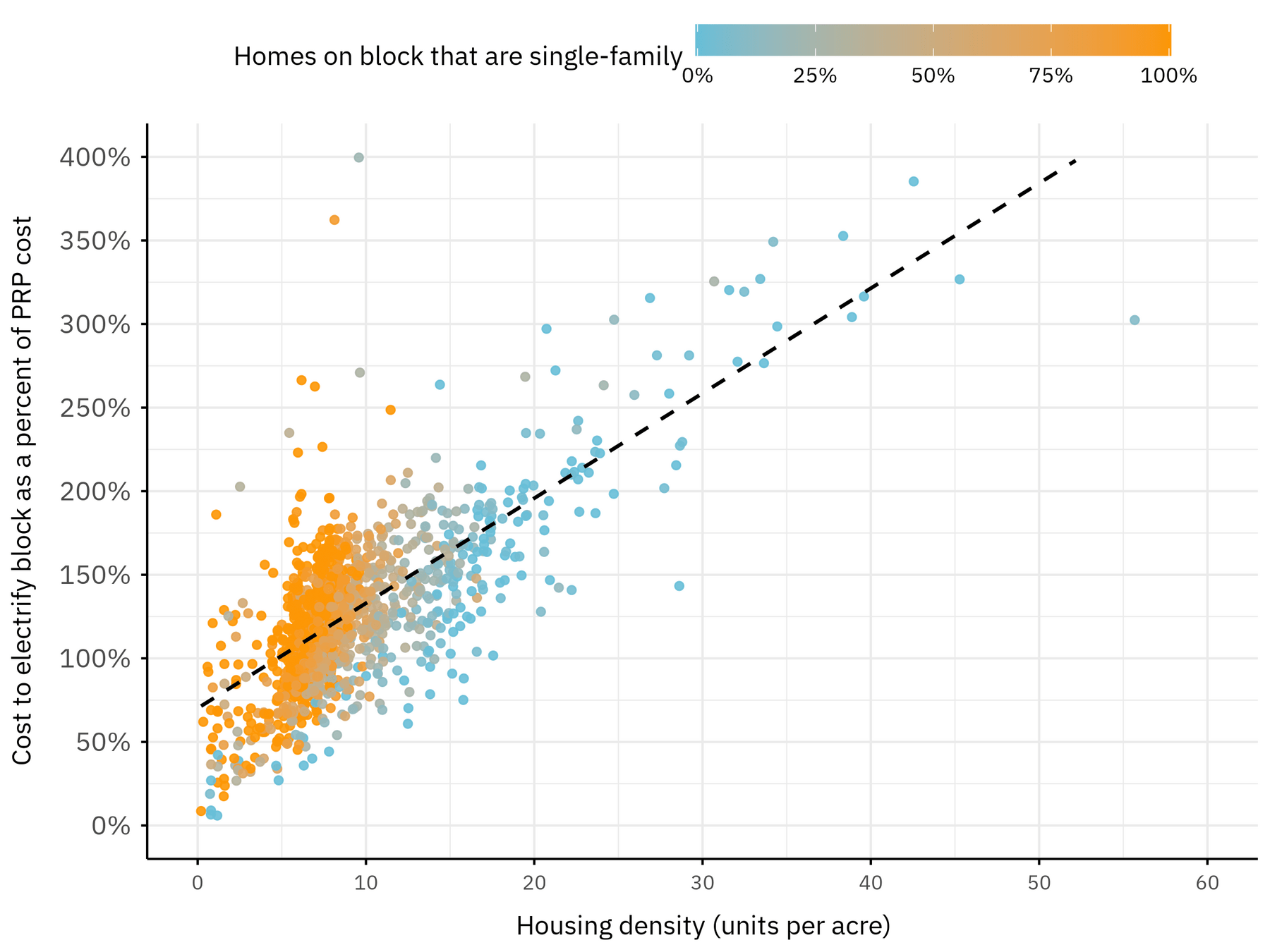
Around a quarter of fully residential blocks are likely cheaper to electrify than replace pipes on.
Caveat: only in planned areas, and before looking at hydraulic feasibility.
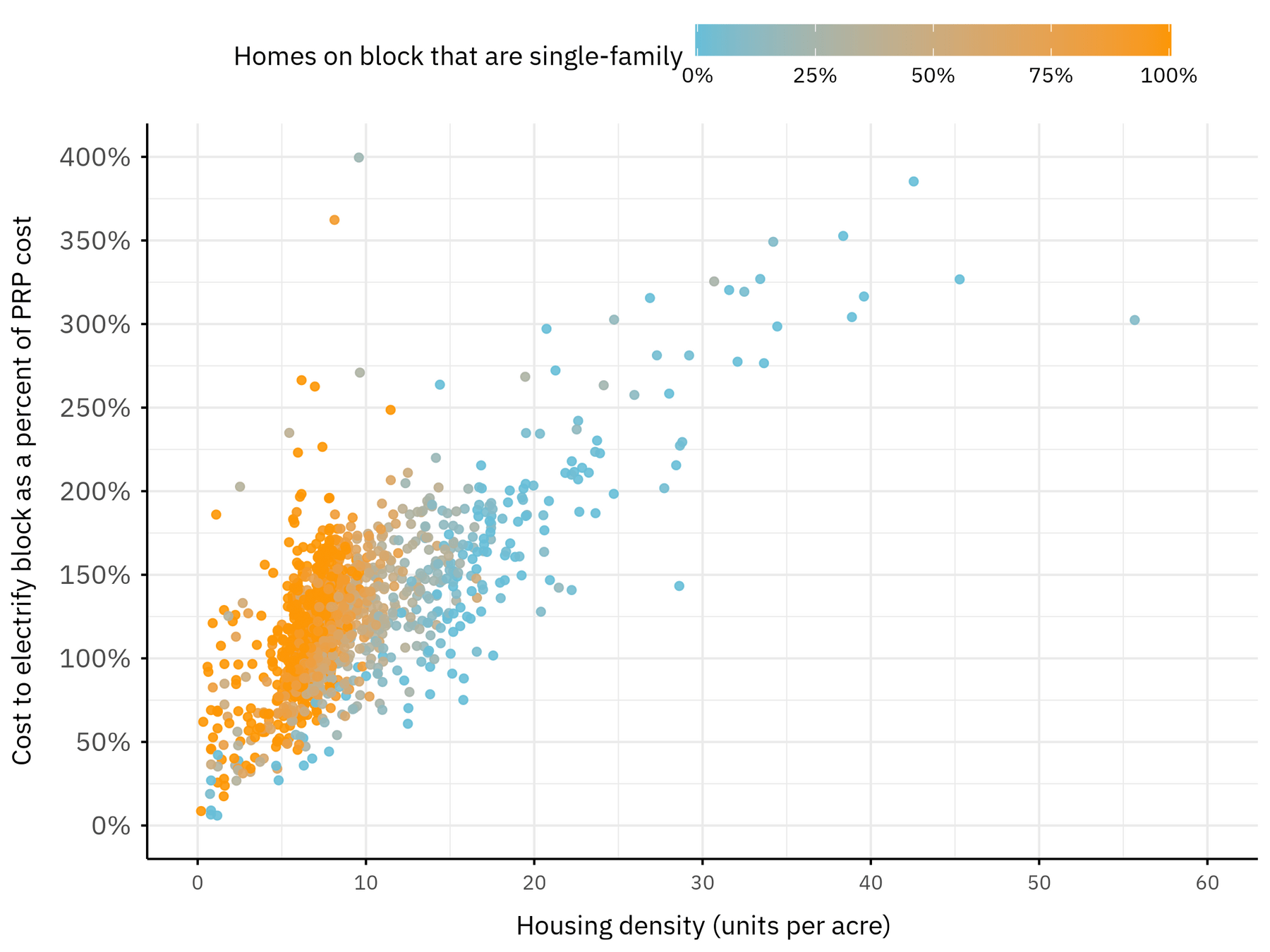
The biggest predictor: housing density.
Across the portfolio of fully residential blocks, targeted electrification investments should cost no more than pipe replacement.
Cost-effectiveness perspective #2
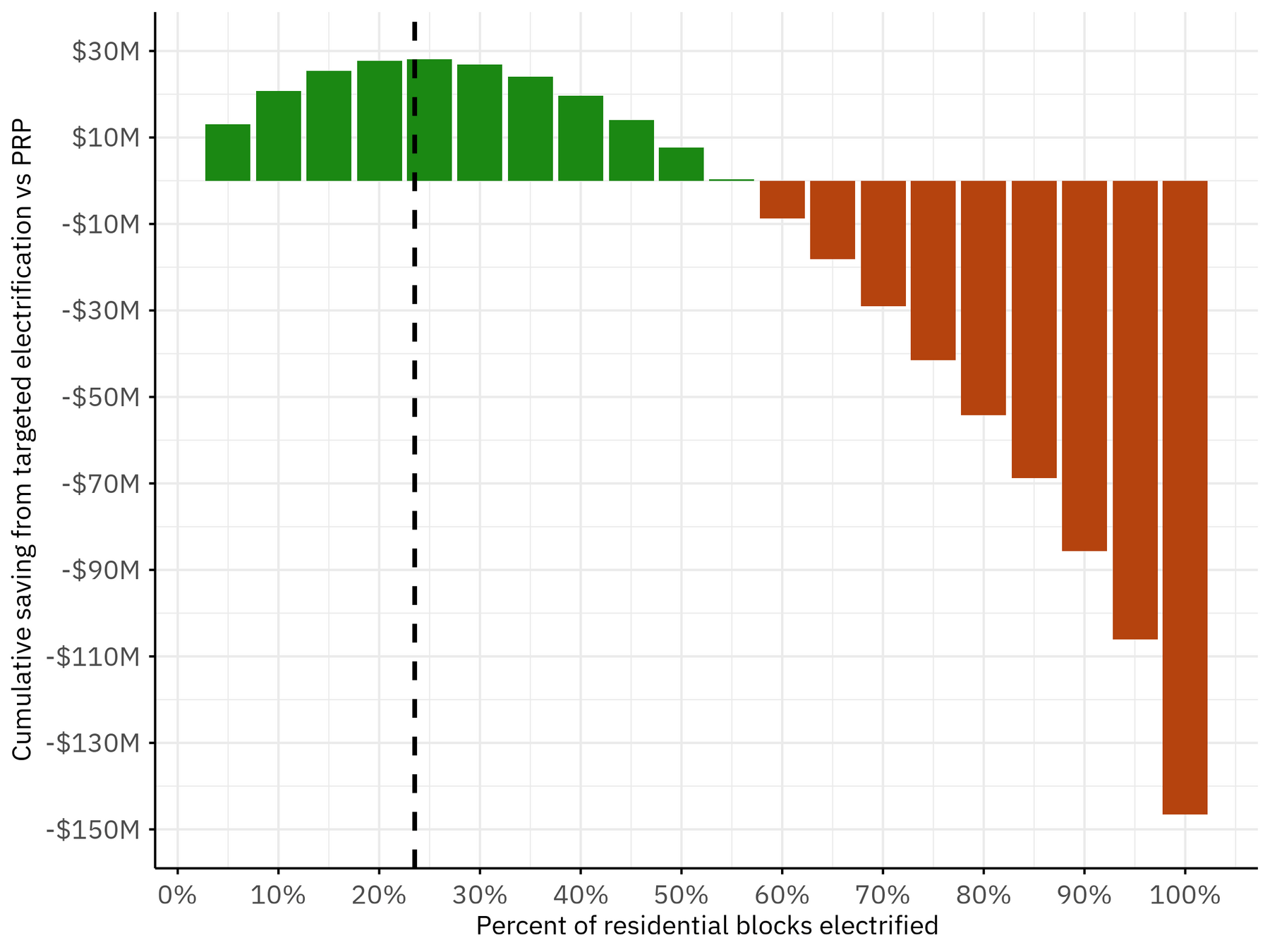
Pursue targeted electrification whenever it minimizes the total cost of addressing leaks + electrification, even if it is more expensive than replacing the pipe on that block.
Cost-effectiveness perspective #3
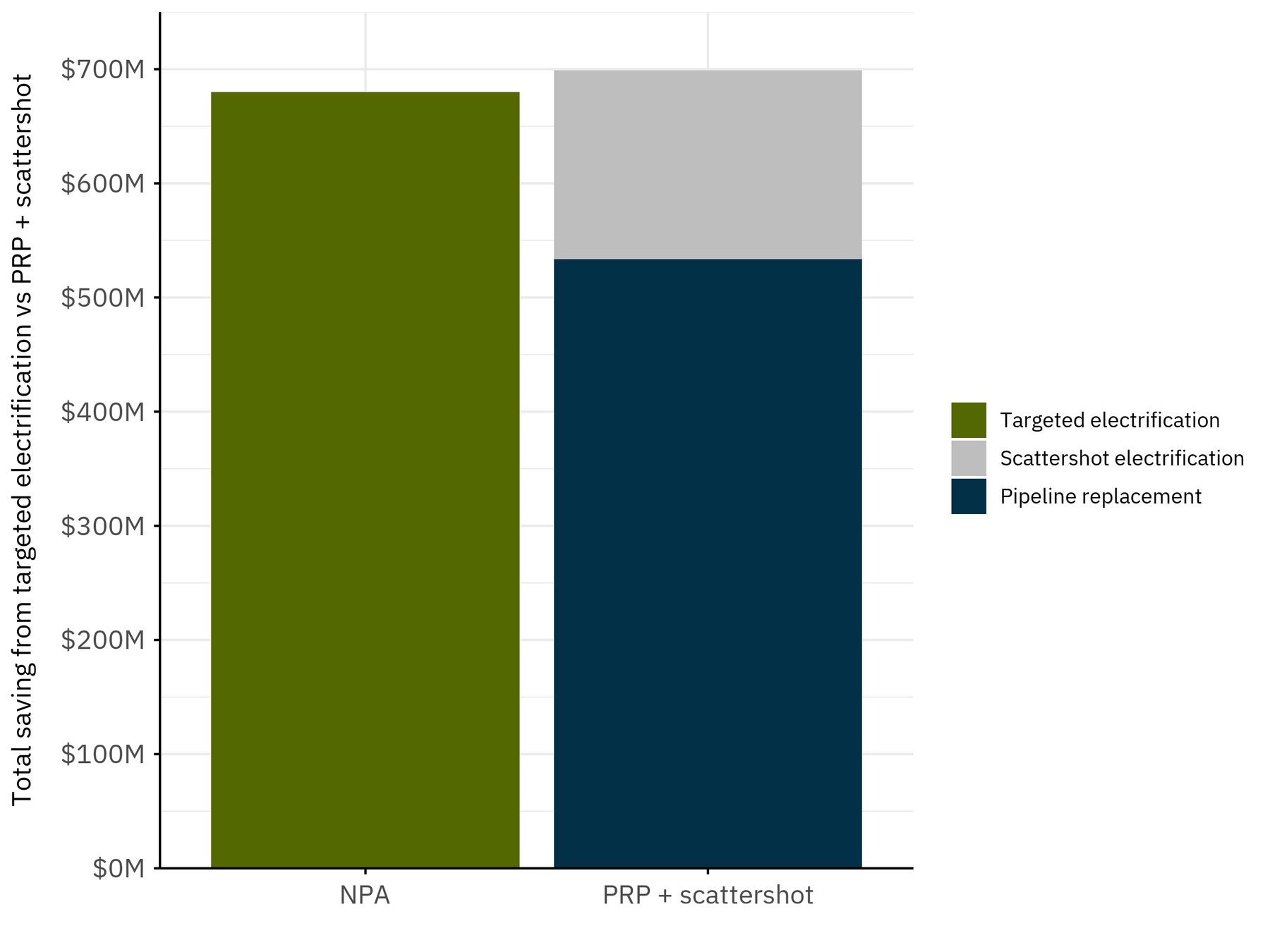
On fully residential blocks...
Electrifying every home is cheaper than replacing all pipes and then electrifying 30% of homes.
This analysis is preliminary.
For a complete analysis, we would need:
- A map from PGL of which sections of the low-pressure gas network it would be hydraulically feasible to decomission.
- Better data on commercial electrification costs
- Distribution network data from ComEd to better estimate electrical capacity upgrade costs
- OR at least: which street segments are on the low-pressure network.
So this preliminary analysis is meant to illustrate a conceptual framework for TE, and an analytical approach to measuring the cost-effective TE opportunity
the ICC should consider.
There are likely hundreds of blocks in Chicago that would be cheaper to electrify than do pipe replacement on.
But even this preliminary analysis clearly shows that no matter which cost-effectiveness perspective you take...
However: under current policy, we will likely electrify less than 1% of cost-effective blocks.
1. Not enough time to retrofit thousands of blocks.
2. If you consider TE on the riskiest pipes only, there will
likely not be enough time.
3. If you don't do system-wide planning for TE, you can't
maximize hydraulic feasibility.
To maximize the number of cost-effective
blocks that we electrify:
1. Time: 15 years, at least.
2. Cost-effectiveness tests that take into account the total system cost, given the City's goal of 30% electrification by 2035.
3. System-wide TE planning: what sequence of projects would maximize hydraulic feasibility?
4. Two tracks of work: minor track to triage the riskiest pipe,
major track to execute the cost-effective TE plan.
web switch.box
bsky @switch.box
mail jpv@switch.box

PGL NPA
By Juan-Pablo Velez